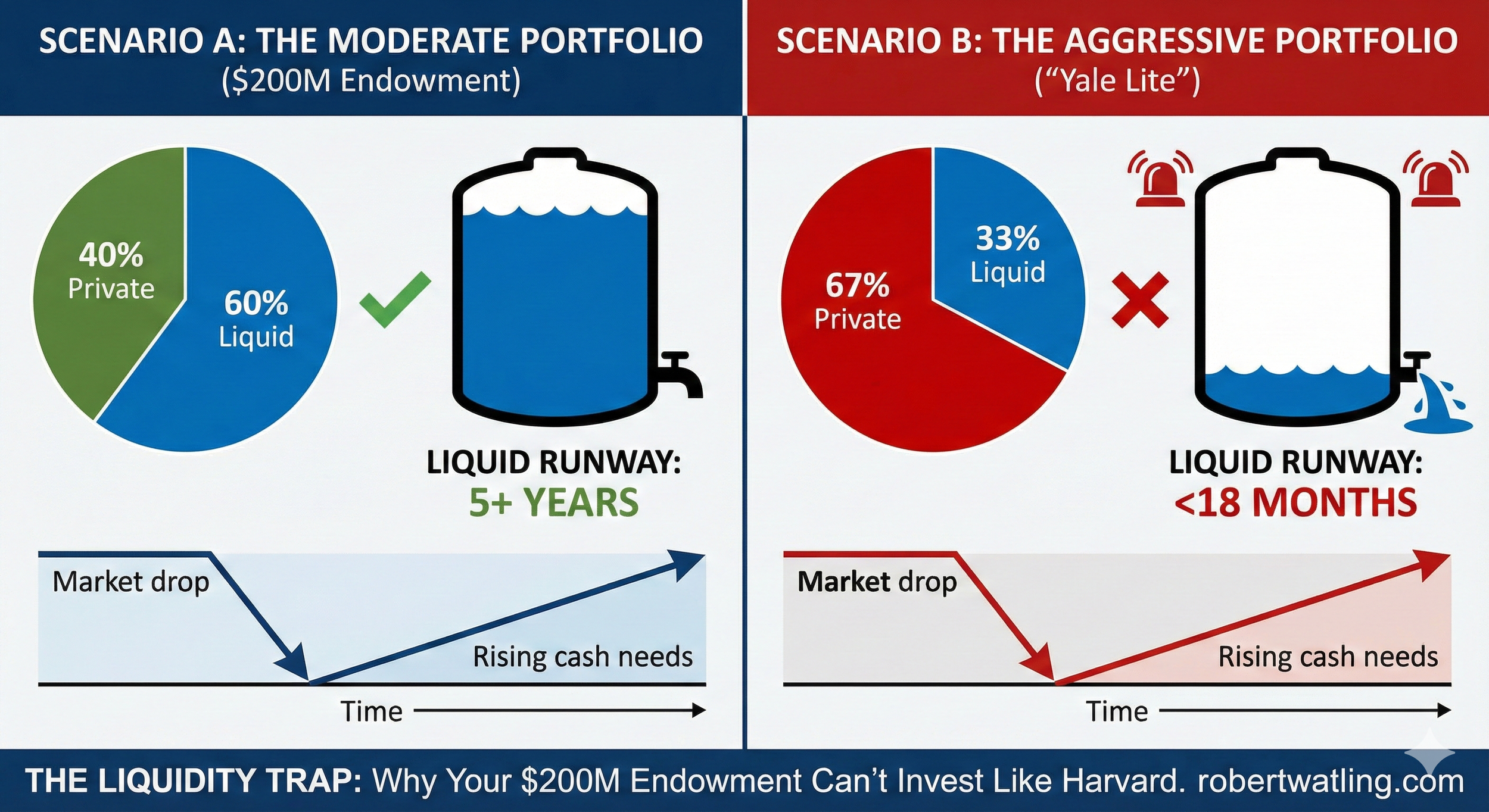
The Liquidity Trap: Why Your $200M Endowment Can’t Invest Like Yale and Harvard
The "Yale Model" of high allocations to illiquid private investments works for elite endowments but creates a dangerous trap for mid-sized, tuition-dependent universities. This post analyzes the structural risks when a $200 million endowment mimics a $50 billion strategy without the requisite balance sheet. Through a hypothetical stress test, we demonstrate how a "perfect storm" of market declines, stopped distributions, and spiking capital calls can drain a university’s liquid assets in under 18 months. We argue that liquidity must be viewed as a strategic asset class and provide a framework for stress-testing your portfolio against existential risk.
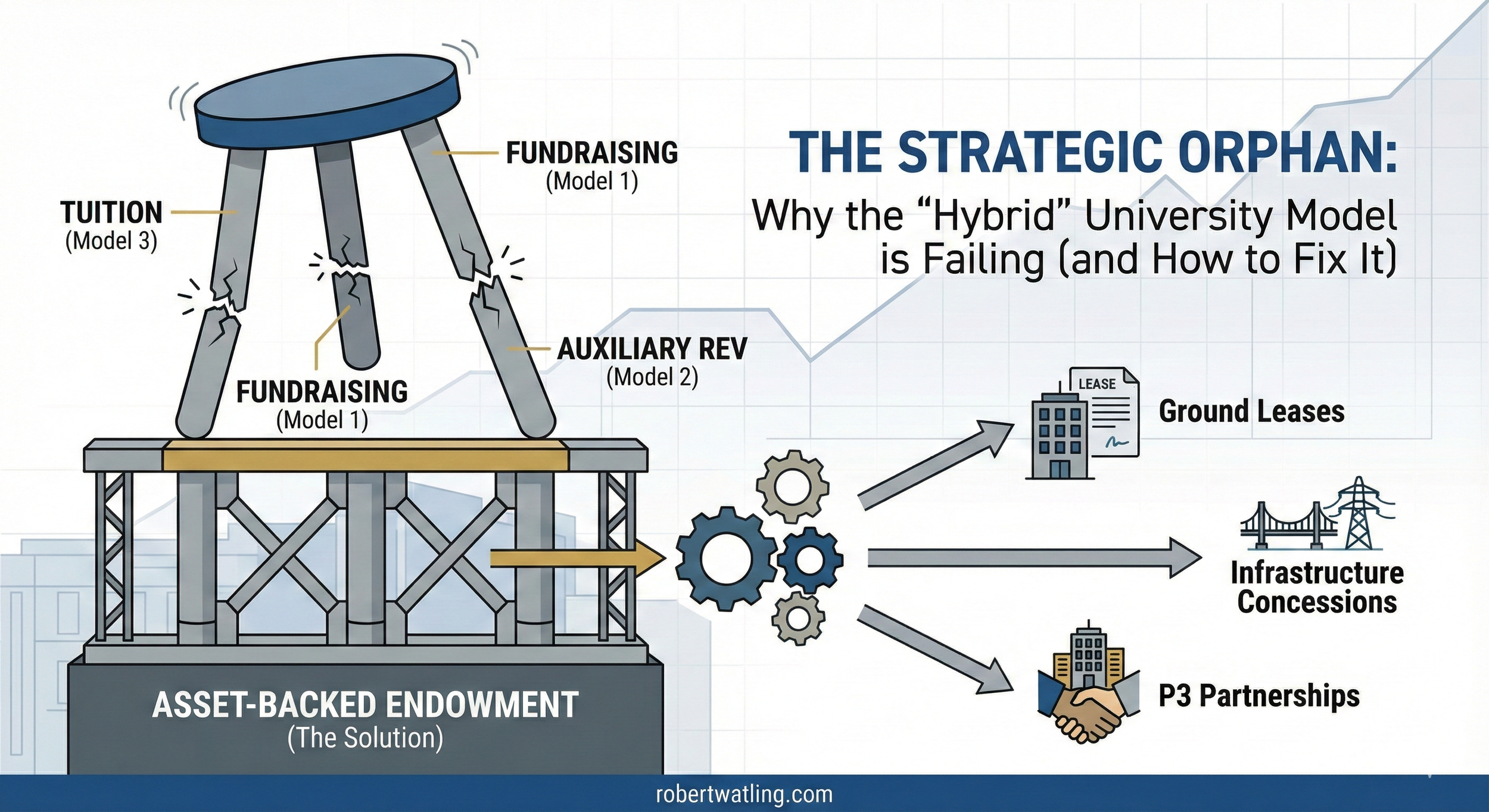
The Strategic Orphan: Why the "Three-Legged Stool" is Broken (And How to Fix It)
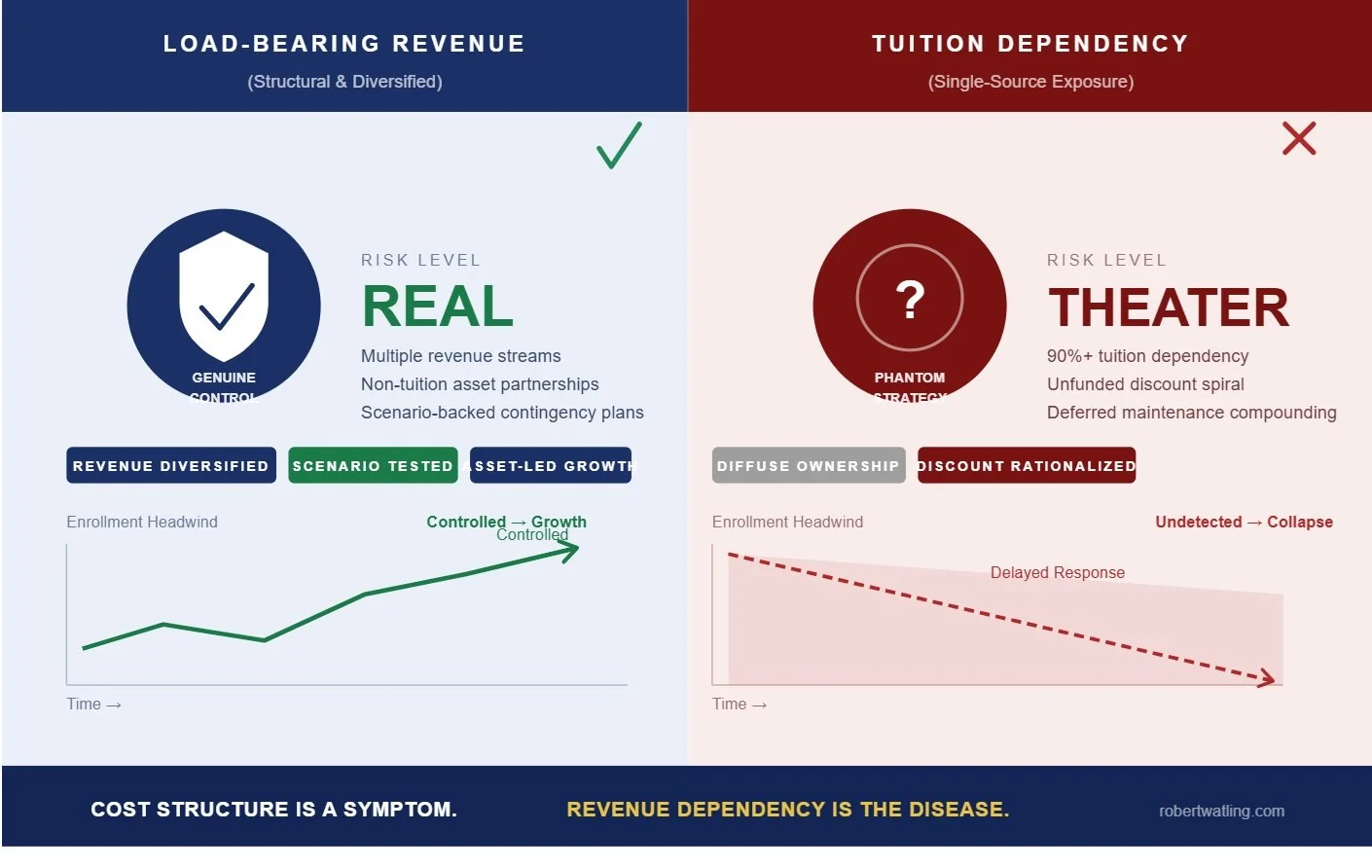
The 'three-legged stool' of higher education finance isn't just wobbly—for many mid-sized universities, it's already broken. Caught between the endowment wealth of elite colleges and the pricing power of research giants, 'hybrid' institutions are becoming strategic orphans. This post diagnoses why the old cross-subsidy model has collapsed and proposes a new path forward: treating your campus not just as facilities to be managed, but as an asset-backed endowment to be monetized.